The full catalog
Every system we install
Two whole-home tiers, a dual-tank build for bigger homes, a dedicated well-water system, two drinking-water options and the add-ons. Specs are the real manufacturer numbers — not marketing rounding.
Watch first
See it explained before you talk to anyone
Four short videos, one per problem. Press play on whichever one sounds like your house — they play right here, nothing to sign up for.
01
Whole Home Systems
Softening for the hardness, carbon for the chlorine, and staged builds for well water. Installed where the water enters the house, so every tap is downstream of it.
 Our most installed system
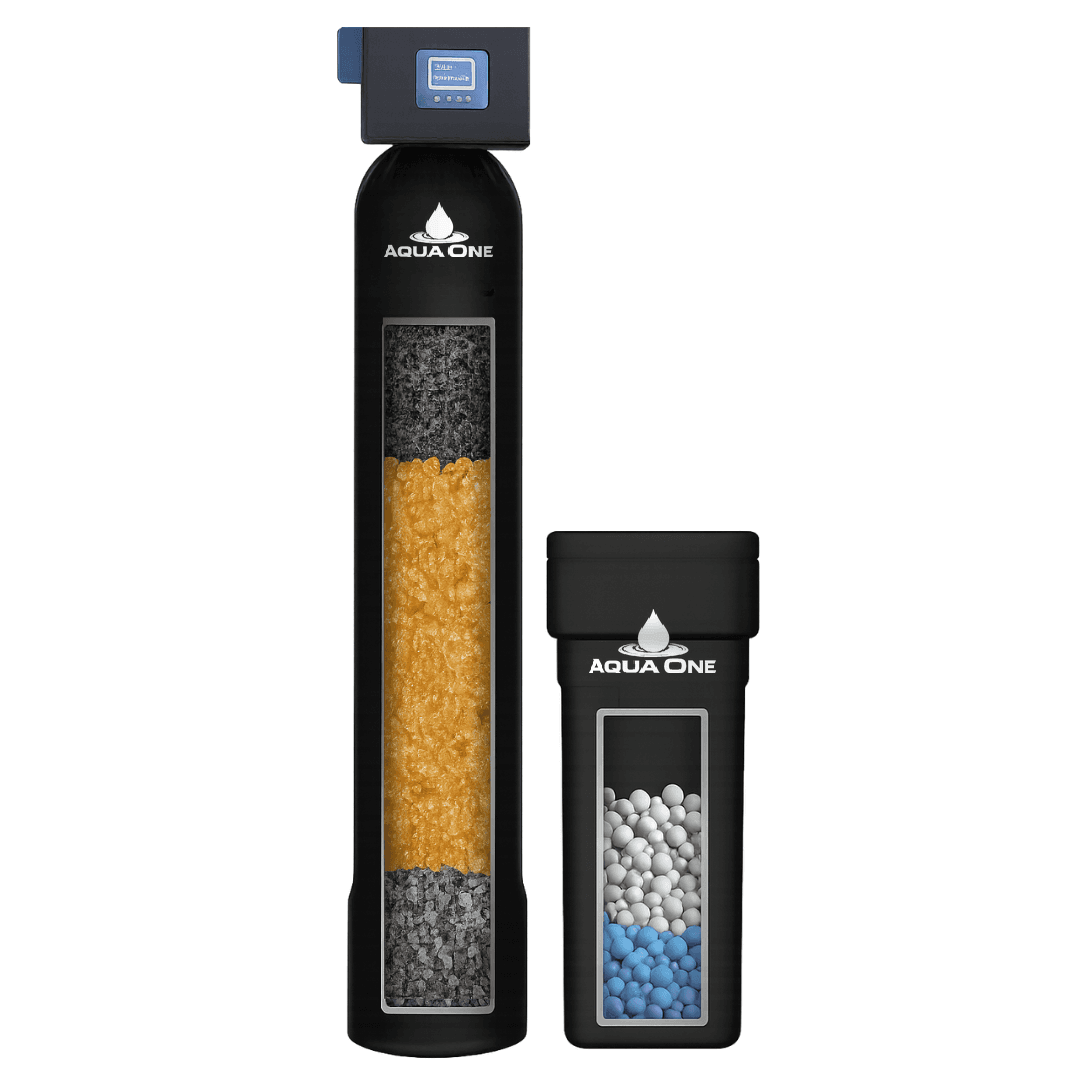
Whole-Home Softener + Filtration
The system most Permian Basin homes need, and most DFW homes want.
A softening tank with a carbon layer and its own brine tank, plumbed in where the water enters the house so every tap, shower and appliance sits downstream of it. The resin takes out the calcium and magnesium that scale your water heater, spot your glassware and stop soap rinsing. The carbon takes out the chlorine taste and smell. In Midland, where the city publishes hardness at 400 to 600 parts per million, this is the system that changes a house.
Details and specs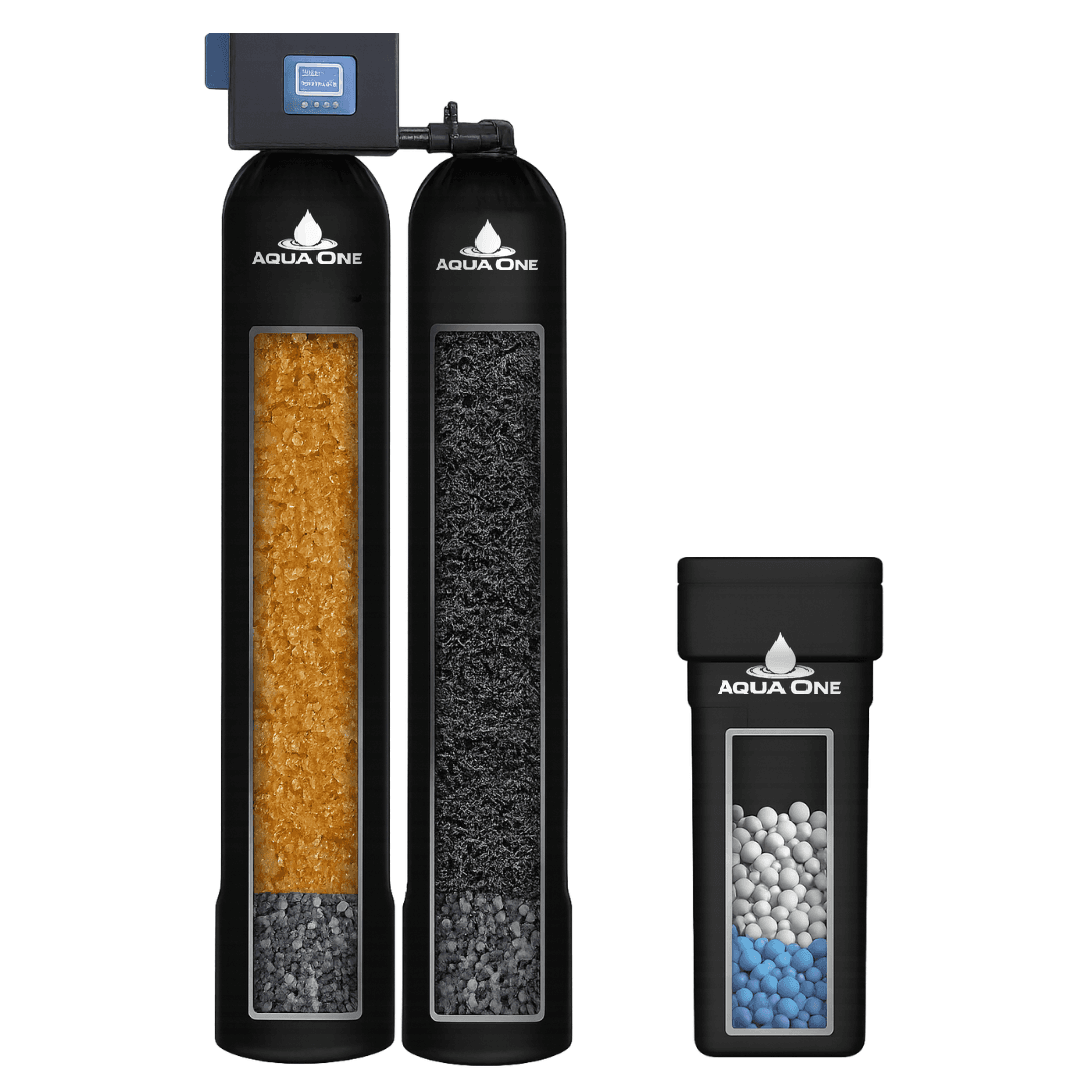
City Water Dual Tank
Two tanks, each doing one job properly.
A dedicated softening tank and a dedicated carbon tank, plumbed one after the other. Treating in stages gives more capacity and longer media life than asking one bed to do everything, which matters on a busy house or on genuinely hard water. On the north side of DFW, where the North Texas Municipal Water District disinfects with chloramine rather than plain chlorine, the dedicated carbon stage is doing real work - chloramine does not gas off on its own.
Details and specs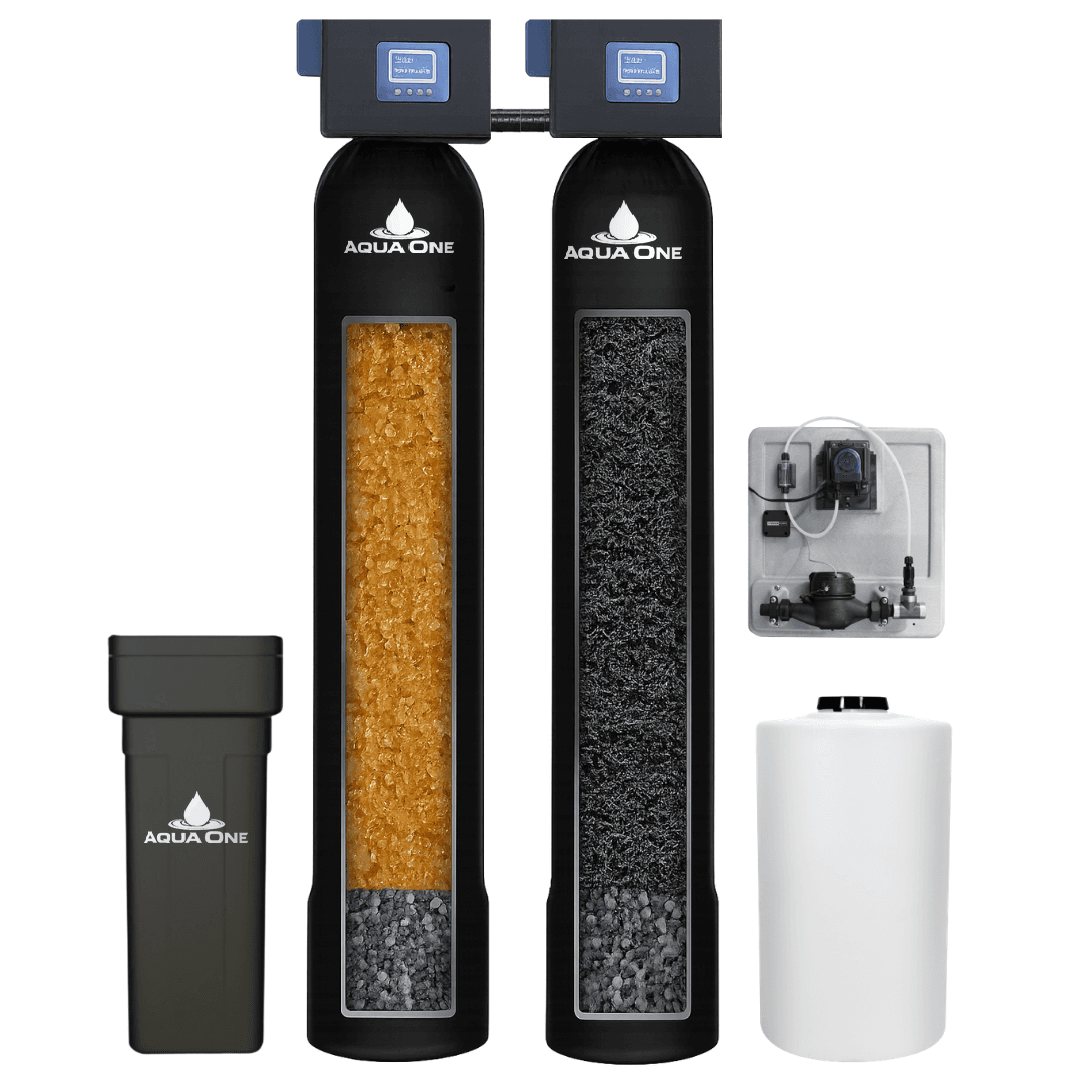
Well Water Treatment
For every home drawing its water straight out of the ground.
Out past the city limits - Greenwood, Gardendale, Stanton, Seminole, and the country south of DFW - a great many homes are on their own well, and nobody is treating that water before it reaches the house. A well brings hardness and iron as standard, and often a rotten-egg sulfur smell that a softener will never fix. This is a staged build: oxidize and filter the iron and sulfur first, then soften, then UV if bacteria have ever shown up. The order matters, because a softening resin bed fouled with iron is an expensive thing to replace.
Details and specs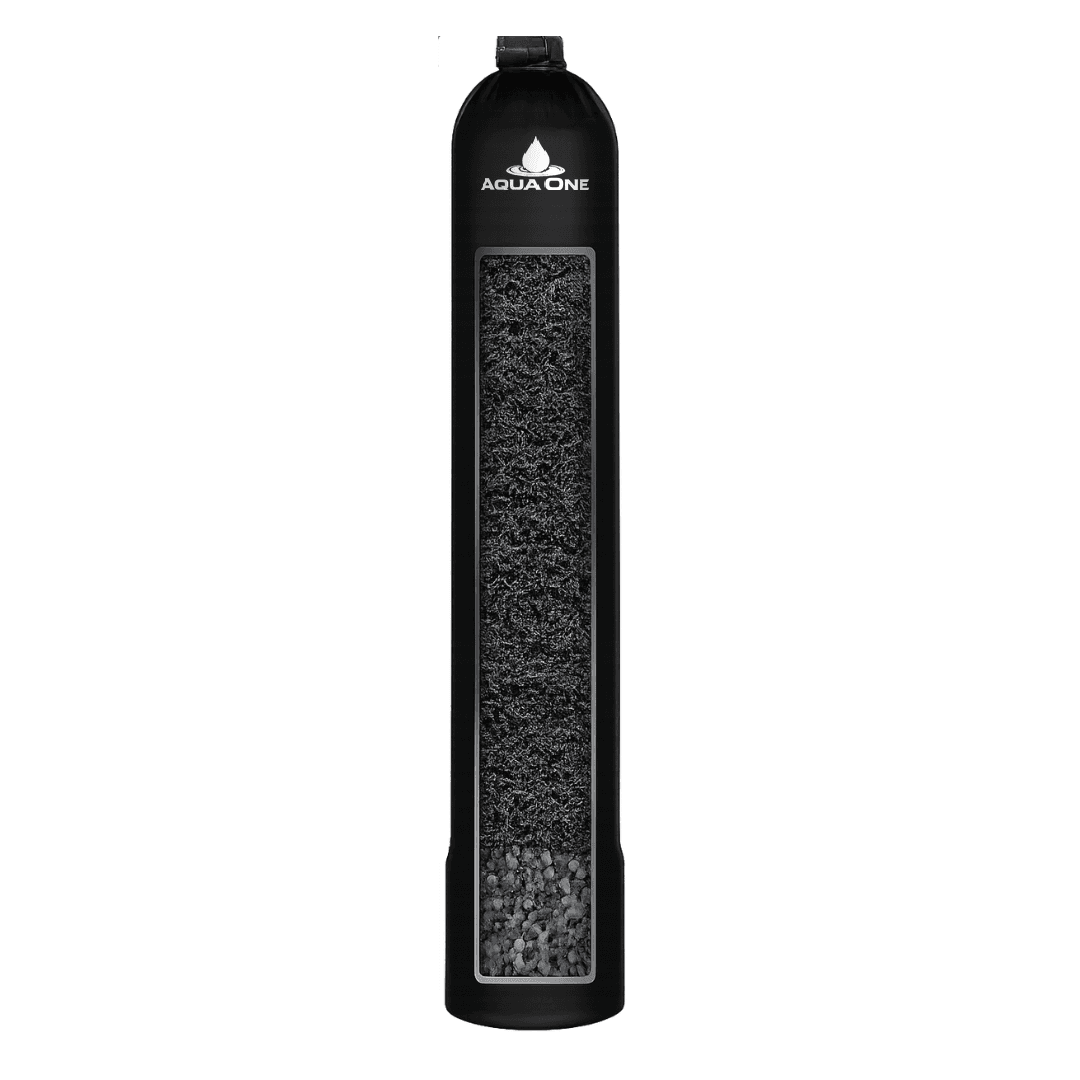
Whole-Home Carbon Filtration
No salt, no brine tank, no drain line.
A single tank of carbon over a polishing gravel bed at the point of entry. It takes out the chlorine or chloramine behind the taste and the smell, and the sediment and grit that come with older plumbing. Nothing to refill and nothing to remember. On a supply that is already soft, or in a home where a drain line is difficult, this is the system that changes what comes out of the tap.
Details and specs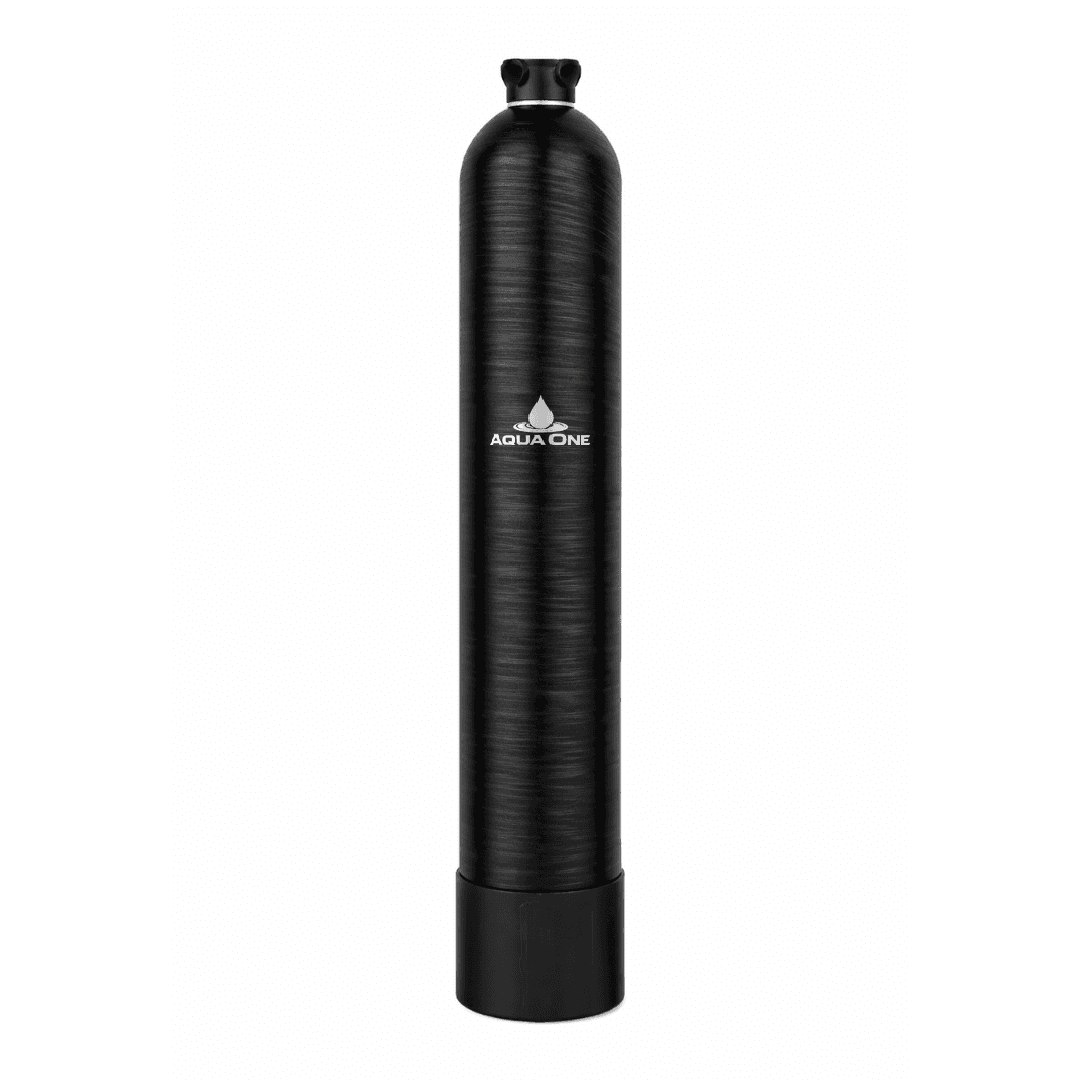
Salt-Free Conditioner
Scale control without salt or wastewater.
A conditioner changes the hardness minerals so they are far less likely to stick to your pipes, your heater element and your shower glass - without removing them, and without using any salt. No regeneration cycle and no wastewater, which makes it the low-maintenance choice and a good fit where a drain is awkward. Worth being straight about the difference: it controls scale rather than removing hardness, so if you want the slippery soft-water feel, the softener is the one.
Details and specs02
Drinking Water Systems
Reverse osmosis at the kitchen sink - the upgrade every household notices first. Better coffee, better ice, and no more buying bottled water.
 The one people notice first
Tankless Reverse Osmosis
The glass of water you actually want to drink.
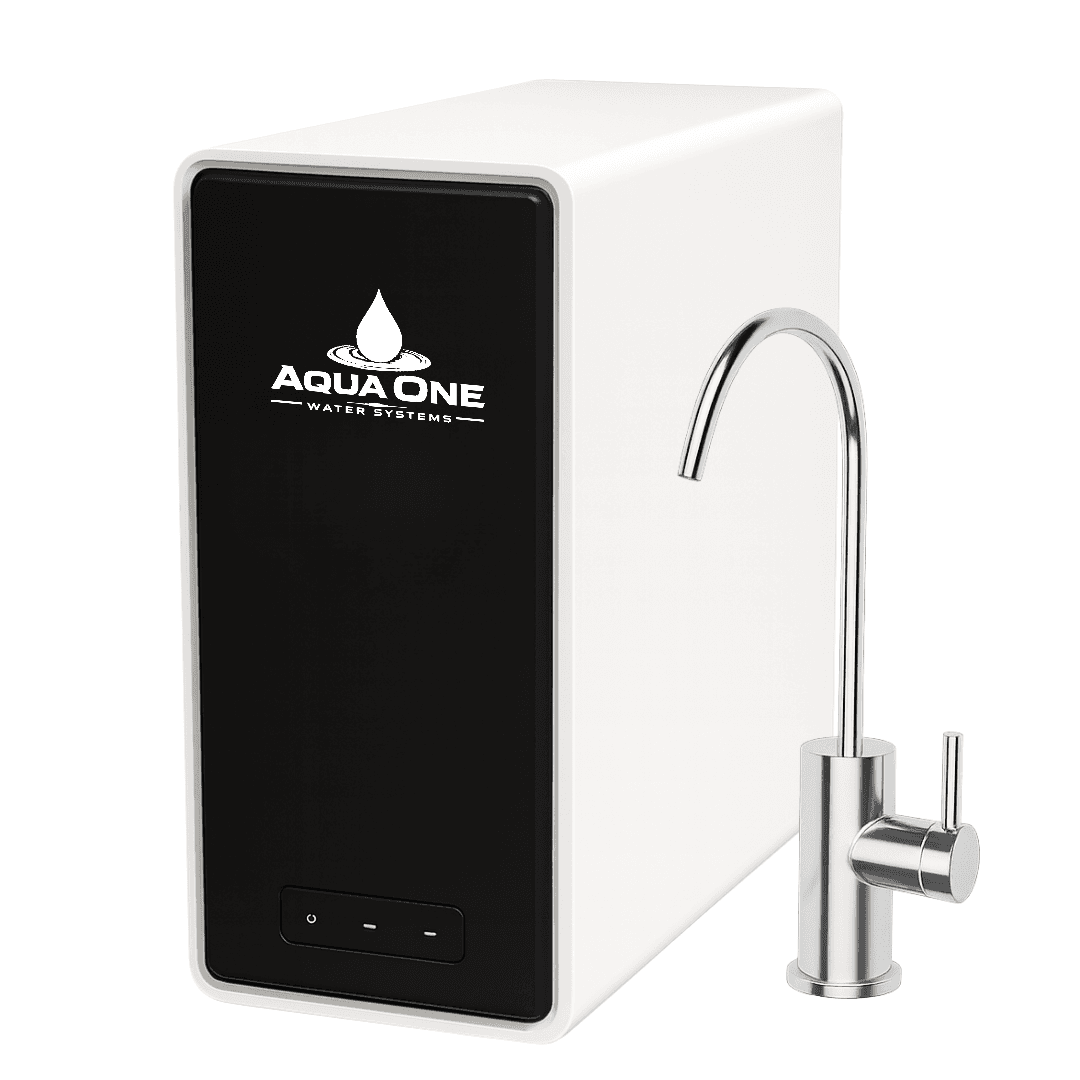
A softener handles hardness and carbon handles taste. Reverse osmosis handles what neither is built for - the dissolved solids, which in West Texas groundwater is the number that makes water taste the way it does. It sits under the kitchen sink with its own faucet, takes up no cupboard space, and it is the change people comment on the first morning: in the coffee, in the ice, and in a plain glass of water. It also ends the bottled-water habit.
Details and specs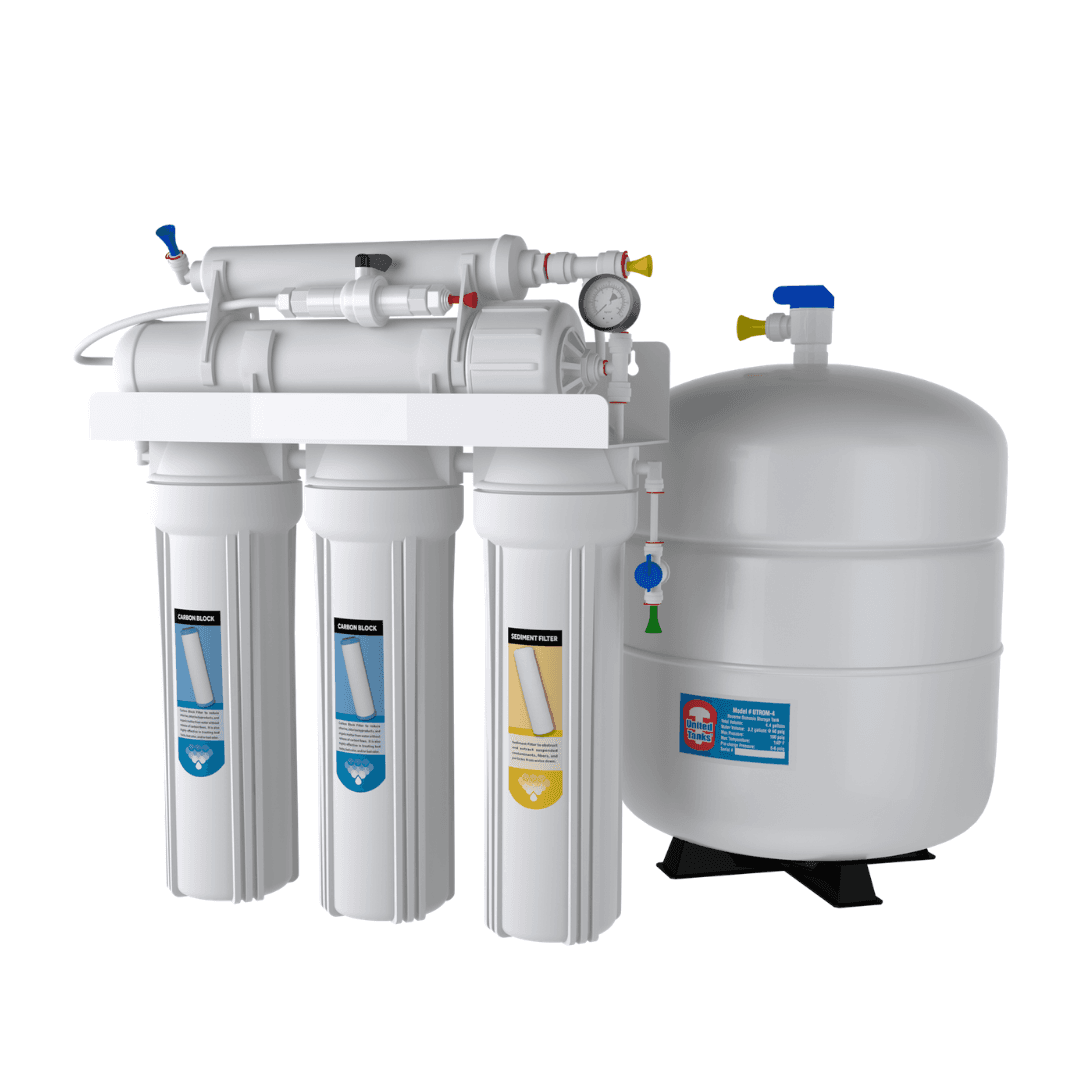
Reverse Osmosis with Storage Tank
The classic under-sink system.
A traditional storage-tank reverse osmosis system feeding its own drinking water faucet. It stores purified water ready to draw, which suits a household that pulls a lot at once. Proven, straightforward and easy to service.
Details and specs03
Add Ons
The layer that finishes a well build, and the pieces that make a system complete.
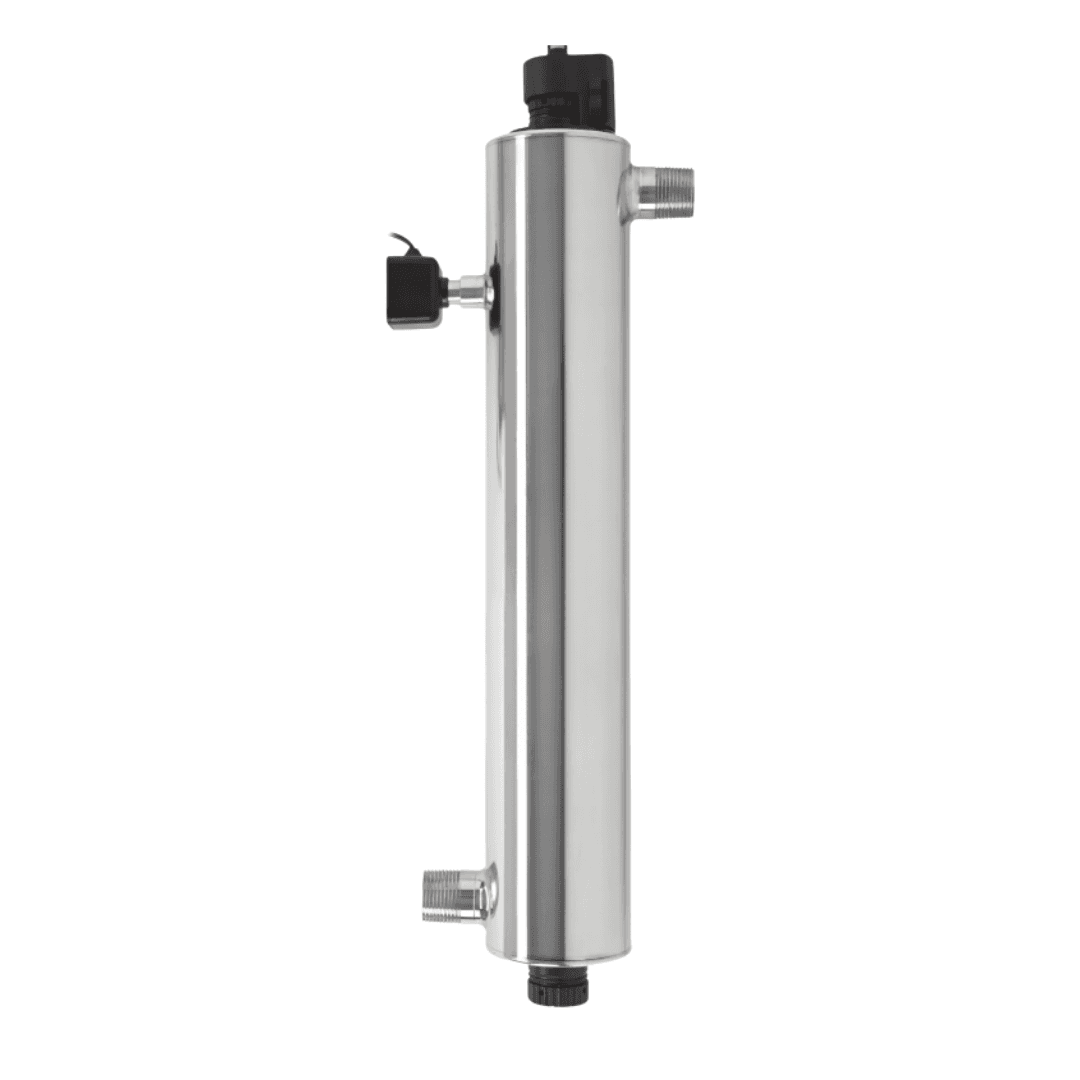
Whole-Home UV Purifier
Ultraviolet light, with nothing added to the water.
UV neutralizes bacteria and microorganisms as the water enters the house, with no chemicals involved. On a private well this is the layer that matters most after heavy rain or a flood, and it belongs at the end of a well build rather than the start.
Details and specsFree water test
Not sure which one you need
That's the normal starting point, and it is exactly what the free water test is for. Fifteen minutes at your own sink and you will know which system fits your water and what it costs.
- Free in-home water test
- Exact price up front
- Locally owned